The Strait of Hormuz: A Systemic Risk to GCC Supply Chains
The ongoing geopolitical escalation in the Middle East is creating real, measurable disruptions across GCC supply chains—and the impact is already visible across energy, food, and industrial sectors.
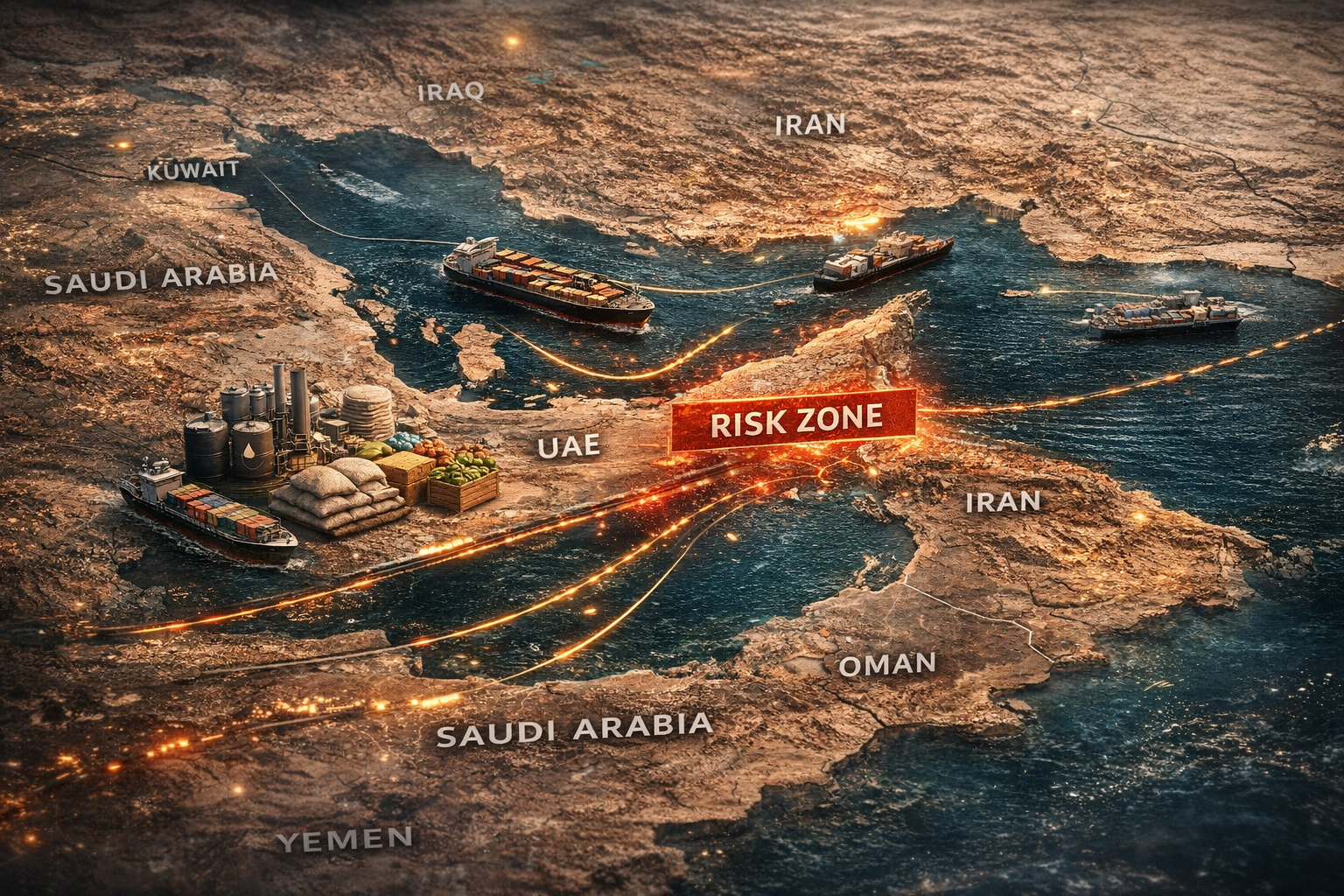
The current state of the region highlights how a single disruption point can cascade across the entire ecosystem, affecting every layer of the procurement and logistics landscape.
🔴 What’s Happening Now
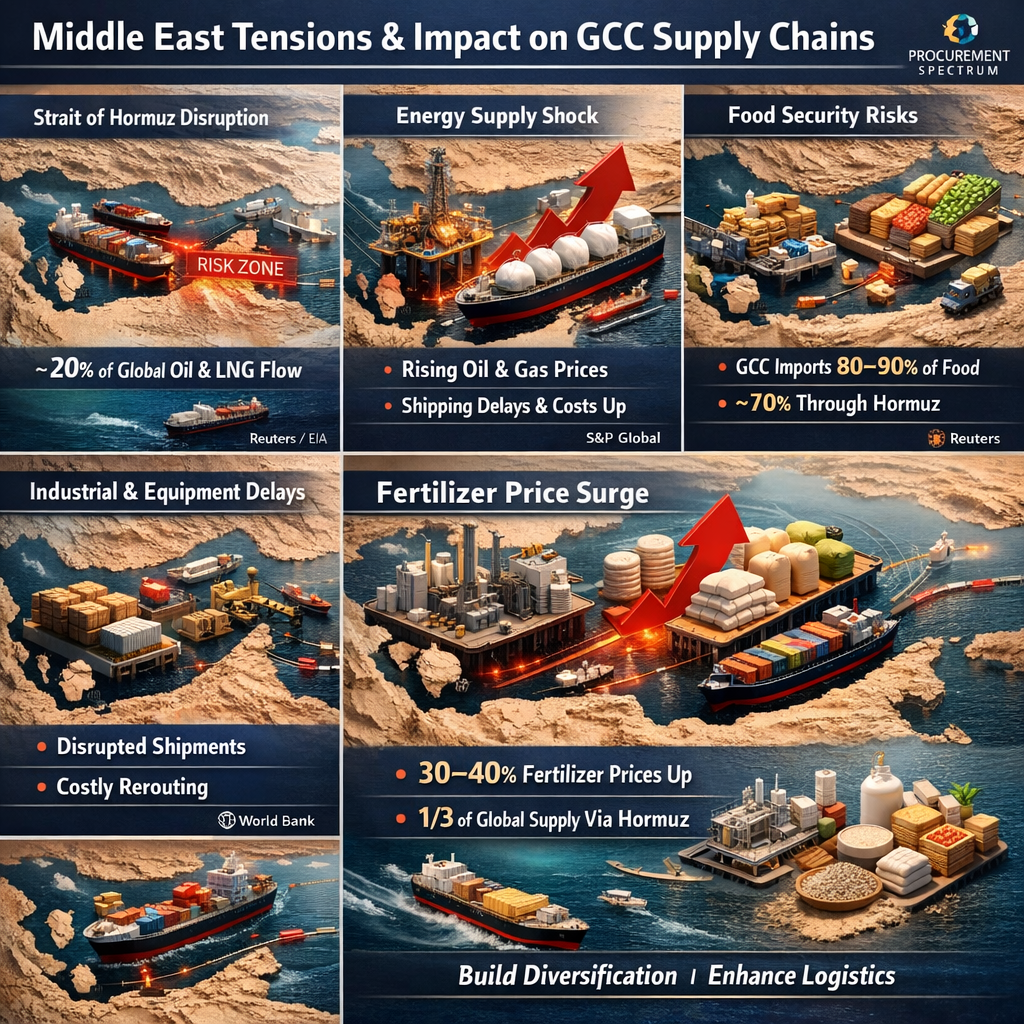
- The Strait of Hormuz carries ~20% of global oil & LNG flows.
- Shipping routes are being disrupted, delayed, or rerouted.
- Freight, insurance, and energy costs are rising sharply.
Source: Reuters, EIA
🟠 Energy & Cost Shock
- Oil & gas supply disruptions driving price volatility.
- Increased fuel costs impacting every supply chain layer.
- Logistics and production costs rising simultaneously.
Source: Reuters, S&P Global
🟡 Food Security Risk (Critical for GCC)
- GCC imports 80–90% of its food.
- ~70% of food imports transit via Hormuz.
- Disruptions lead to direct inflation & availability risk.
Source: Reuters, World Bank
🟢 Industrial & Logistics Disruption
- Heavy equipment and machinery shipments delayed.
- Rerouting increasing lead times and costs.
- War-risk insurance premiums rising.
Source: Reuters, World Bank
🔵 Fertilizer & Agriculture Impact
- Fertilizer prices up 30–40%.
- Strong linkage between energy and food inflation.
- Downstream impact on global food supply chains.
Source: Reuters, S&P Global
⚠️ What This Means for GCC Leaders
This is no longer a short-term disruption. It is a structural stress test of supply chain resilience. Organizations must urgently focus on:
- Supply diversification beyond Hormuz.
- Strategic reserves (food, fuel, critical materials).
- Regional manufacturing & nearshoring.
- End-to-end supply chain visibility.
Bottom Line: The GCC’s strength in energy exports is now mirrored by its vulnerability in import dependency. Resilience is no longer optional—it is a competitive advantage.